Clothing is one of the most fundamental necessities of human civilization, yet the way we produce garments has undergone a monumental evolution over the past few centuries. What began as a highly localized, labor-intensive craft performed in homes and small tailor shops has transformed into a multi-trillion-dollar global enterprise. The history of the garment industry is not merely a chronicle of changing fashions; it is a story of technological innovation, economic shifts, human labor, and global trade dynamics that shaped the modern industrialized world.
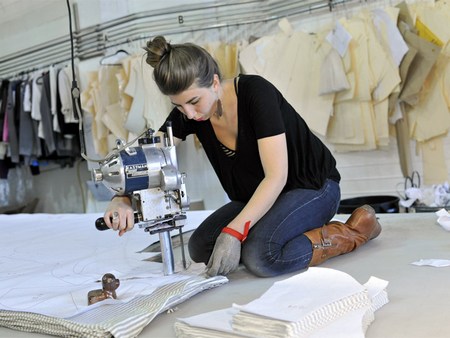
The Pre-Industrial Era: Handmade and Tailor-Made
Before the middle of the eighteenth century, the concept of buying off-the-rack clothing did not exist for the average person. Clothing production was entirely manual, requiring significant time, skill, and resourcefulness.
Spun fibers were woven into cloth on handlooms, and garments were hand-sewn stitch by stitch. Wealthier members of society employed skilled tailors and dressmakers who created custom-fitted garments using expensive imported fabrics. For the working class and peasantry, clothing was made at home, usually by women. Because fabric and labor were precious, garments were built to last. Clothes were routinely repaired, resized, repurposed, and passed down through generations until the fabric was completely worn through.
The Industrial Revolution: Mechanization Takes Hold
The landscape of textile and clothing production changed dramatically during the Industrial Revolution in the eighteenth and nineteenth centuries. Mechanization transformed every stage of textile creation, beginning with mechanized spinning machines like the Spinning Jenny and powered looms that produced cloth in unprecedented quantities.
However, the true turning point for the garment industry specifically came with the invention and widespread adoption of the commercial sewing machine in the mid-nineteenth century. Pioneers like Elias Howe and Isaac Singer refined mechanisms that enabled seamstresses to produce garments at speeds twenty times faster than hand-sewing.
Around the same period, standardized sizing systems were developed. Driven in part by the need to produce thousands of military uniforms during major conflicts such as the American Civil War, manufacturers developed mathematical scale charts based on population measurements. This innovation laid the groundwork for ready-to-wear clothing, allowing factories to produce mass quantities of standardized garments in advance rather than waiting for custom orders.
The Rise of Sweatshops and Ready-to-Wear Fashion
By the late nineteenth and early twentieth centuries, urban centers like New York, London, and Paris became bustling hubs of garment manufacturing. Thousands of immigrants moved to these cities, providing a large labor pool for the expanding industry.
Garment production was often organized through the “piecework” system in small, cramped workshops known as sweatshops. Workers, predominantly young women, were paid per finished piece rather than by the hour. Working conditions in these early garment factories were notoriously harsh, featuring long hours, poor ventilation, low wages, and severe safety hazards.
A tragic catalyst for reformer rights was the Triangle Shirtwaist Factory fire in New York City in 1911, which claimed the lives of 146 garment workers. This disaster ignited public outrage and led to significant labor reforms, stricter workplace safety regulations, and the strengthening of garment worker unions. Throughout the mid-twentieth century, manufacturing conditions improved in Western nations, and the ready-to-wear market expanded to cater to a growing middle class that demanded stylish, affordable everyday clothes.
Globalization and Offshoring in the Late Twentieth Century
The late twentieth century marked another structural shift in the garment industry: globalization and the migration of manufacturing. As labor costs, safety standards, and environmental regulations rose in Western nations, apparel brands began seeking lower production costs elsewhere.
Advances in global logistics, shipping containerization, and communication technologies allowed companies to decouple brand management and design from physical manufacturing. Garment production shifted rapidly to developing economies in Asia, Latin America, and Eastern Europe, where labor was abundant and far less expensive.
Countries like China, India, Bangladesh, Vietnam, and Cambodia became global manufacturing powerhouses. This international supply chain enabled Western retailers to lower their production expenses while scaling up volume to unprecedented heights.
The Fast Fashion Era and the Sustainability Imperative
The turn of the twenty-first century saw the rise of the “fast fashion” business model. Retailers compressed the traditional seasonal design cycle from months to mere weeks. Instead of two to four collections per year, fast-fashion brands began releasing micro-collections continuously, mimicking high-fashion trends seen on runways and digital media at accessible prices.
While fast fashion made clothing more affordable and accessible than ever before, it also created major environmental and social challenges. Overproduction and rapid consumption led to massive textile waste, water pollution from industrial dyes, and intense pressure on factory managers in developing nations to meet razor-thin profit margins and tight deadlines.
In response, the modern garment industry is witnessing a growing movement toward sustainability, circular fashion, ethical labor transparency, and material innovation. Consumers and regulatory bodies increasingly demand traceable supply chains, eco-friendly textiles, and fair treatment for workers worldwide.
Conclusion
The journey of the garment industry—from individual hand-stitched garments crafted at home to complex global supply chains producing billions of items annually—reflects the broader economic history of modern civilization. It illustrates how human ingenuity can transform a basic survival need into a dynamic global engine of trade, culture, and innovation. As the industry faces the future, the primary challenge will be balancing the efficiency of mass production with environmental stewardship and social equity, ensuring that the clothes we wear are made responsibly for generations to come.